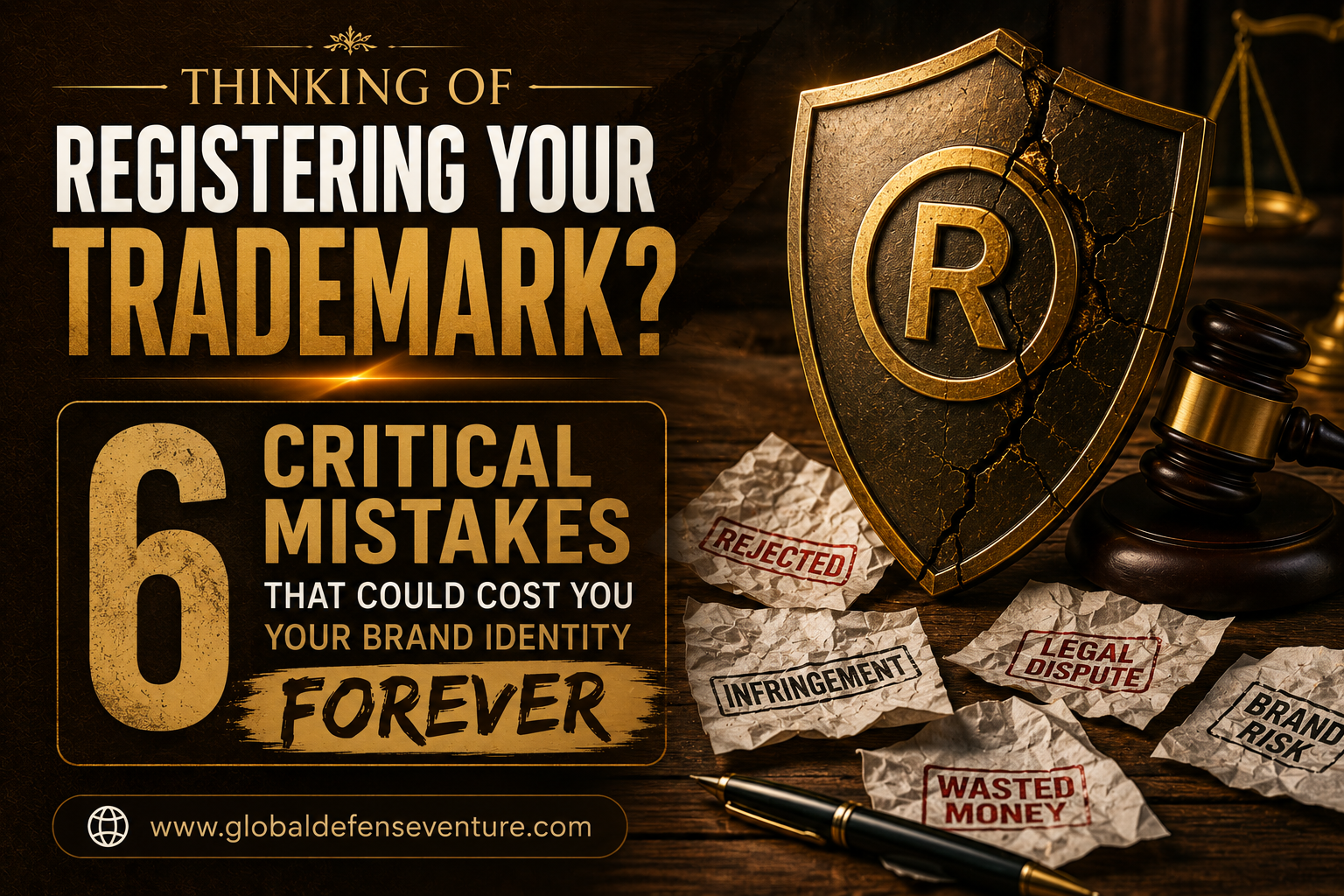
In today’s fast-moving digital economy, your brand is not just a name or a logo—it is your identity, your credibility, and your long-term business value. Yet, thousands of entrepreneurs delay trademark registration until it is too late, only to discover that someone else has already claimed what they built.
This is not just a legal issue. It is a business survival issue.
A trademark is what protects your brand from imitation, misuse, and identity theft in the marketplace. Without it, your business remains exposed—vulnerable to copycats, disputes, and even forced rebranding after years of effort.
The reality is simple: the earlier you act, the stronger your protection becomes. Waiting creates risk. Acting early creates authority.
Below are the most critical insights every business owner must understand before registering a trademark.
1. Don’t Assume Your Brand Name Is Automatically Protected
Many entrepreneurs believe that simply using a name in business gives them ownership rights. This is a dangerous misconception.
Without official registration, your brand remains legally unprotected in most jurisdictions. Someone else can register a similar or even identical trademark and legally challenge your right to use your own brand.
The urgency is clear: ownership is not given—it is secured through registration.
2. Conduct a Deep Trademark Search Before You Commit
One of the most costly mistakes is skipping proper trademark clearance searches.
A name might feel unique, but legally it may already exist in another category or region. This can lead to rejection, legal disputes, or forced rebranding after launch.
A proper search helps you avoid:
- Identity conflicts
- Legal objections
- Financial loss from rebranding
- Brand confusion in the market
Think of this step as your first line of defense.
3. Choose a Strong and Distinctive Brand Identity
Not all trademarks are equally strong. Generic or descriptive names are harder to protect and easier for competitors to challenge.
The strongest trademarks are:
- Invented or coined terms
- Unique combinations of words
- Distinctive brand identities that are not descriptive of the product
The more unique your brand name, the stronger your legal protection becomes.
4. Register in the Right Classes for Future Growth
Trademark protection is not universal—it applies only to specific categories of goods or services known as “classes.”
A common mistake is registering only for current business activity, ignoring future expansion.
Smart businesses think ahead:
- Where will your brand be in 3 to 5 years?
- Will you expand into digital services, retail, or global markets?
Registering in the right classes today prevents conflicts tomorrow.
5. Don’t Delay Registration After Launch
Time is a silent risk factor. The longer you wait, the higher the chance that another entity may register a similar name.
Once that happens, even if you created the brand first, legal ownership may not be in your favor.
Speed matters. Early registration ensures you secure rights before competitors even realize your brand’s value.
6. Protect Your Brand Globally if You Plan to Scale
If your business has international potential, limiting protection to a single country can be a costly oversight.
Global expansion requires strategic trademark planning across multiple jurisdictions. Without it, your brand could be legally used or copied in other markets.
Think beyond local protection—build global ownership from the beginning.
Final Thought
A trademark is not just a legal document. It is a long-term business shield. It protects your reputation, your identity, and your future market value.
In a world where brands can be copied overnight, protection is not optional—it is essential.
The question is not whether you should register your trademark.
The real question is how much risk you are willing to take by delaying it.