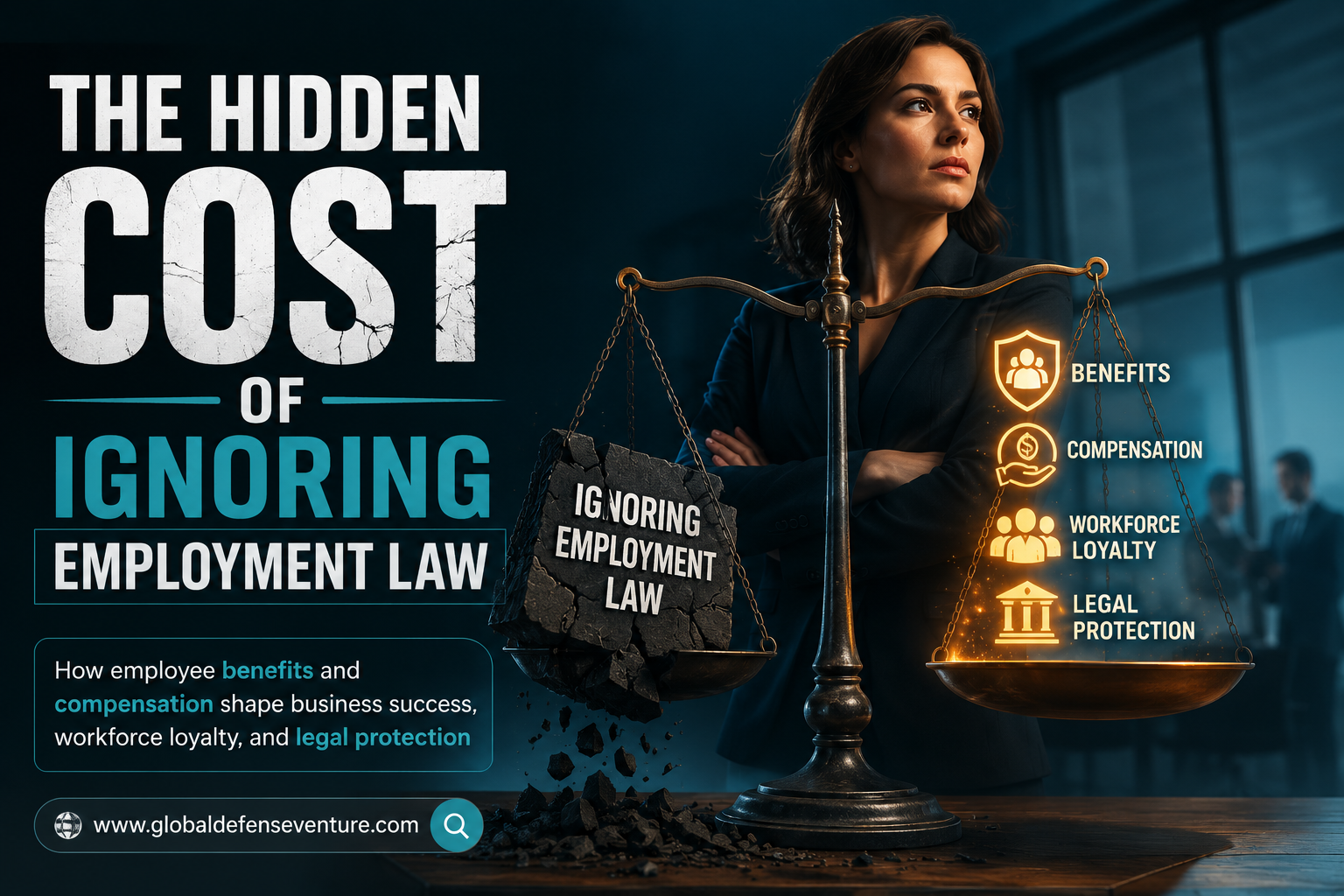
In today’s highly competitive business environment, employee benefits and compensation have become far more than payroll considerations. They are now powerful strategic tools that influence talent acquisition, employee retention, workplace culture, productivity, brand reputation, and organizational growth. However, behind every compensation package and employee benefit lies a critical framework that many organizations underestimate: employment law.
Employment law governs the relationship between employers and employees, establishing the legal standards that businesses must follow regarding wages, benefits, working conditions, discrimination protections, leave entitlements, and workplace rights. Organizations that fail to understand and comply with these regulations often face financial penalties, legal disputes, reputational damage, and declining employee trust.
The impact of employment law on employee benefits and compensation extends beyond compliance. It shapes how organizations attract top talent, maintain workforce satisfaction, and build sustainable growth strategies. In an era where employees increasingly evaluate employers based on compensation fairness and benefit offerings, understanding the connection between employment law and workforce management has never been more important.
Understanding employment law in the modern workplace
Employment law encompasses a wide range of regulations designed to protect employees while ensuring fair and lawful business practices. These laws establish minimum standards for compensation, benefits, workplace safety, equal treatment, and employee rights.
Key areas influenced by employment law include:
- Minimum wage requirements
- Overtime compensation
- Paid leave policies
- Health and retirement benefits
- Equal pay regulations
- Anti-discrimination protections
- Family and medical leave
- Workplace accommodations
- Employee classification standards
- Severance and termination practices
These legal requirements create the foundation upon which compensation and benefits programs are built.
Why employee compensation is directly affected by employment law
Compensation is one of the most heavily regulated aspects of employment. Organizations cannot simply determine pay structures based solely on business preferences.
Employment laws often establish:
Minimum wage protections
Governments implement minimum wage laws to ensure workers receive fair compensation for their labor. Employers must regularly monitor changes in wage regulations to remain compliant.
Failure to comply can result in:
- Financial penalties
- Back-pay obligations
- Legal claims
- Public scrutiny
- Damage to employer reputation
Overtime regulations
Many jurisdictions require employers to provide additional compensation when employees exceed standard working hours.
Organizations that misclassify employees or fail to track overtime accurately expose themselves to significant legal risks and financial liabilities.
Equal pay requirements
Modern employment laws increasingly emphasize pay equity. Employers must ensure compensation decisions are based on legitimate business factors rather than gender, ethnicity, age, disability, or other protected characteristics.
Transparent compensation practices are becoming essential for legal compliance and workforce trust.
The growing importance of employee benefits under employment law
Benefits have evolved from optional perks into essential components of total compensation packages.
Today’s workforce often evaluates benefits with the same importance as salary.
Employment law influences benefits such as:
Health insurance
Many jurisdictions require employers to provide access to healthcare coverage or contribute toward employee health plans.
Comprehensive healthcare benefits help organizations:
- Attract qualified candidates
- Improve employee wellbeing
- Reduce absenteeism
- Increase workforce stability
Paid leave entitlements
Employment legislation often mandates various forms of leave, including:
- Annual leave
- Sick leave
- Maternity leave
- Paternity leave
- Family care leave
- Bereavement leave
Employers must ensure policies align with legal obligations while maintaining operational efficiency.
Retirement and pension contributions
Many countries require employers to participate in retirement savings programs or contribute to pension funds.
These benefits provide long-term financial security for employees while strengthening employer attractiveness.
Employee classification: A costly legal mistake
One of the most significant legal risks affecting compensation and benefits involves employee classification.
Businesses frequently engage:
- Full-time employees
- Part-time employees
- Temporary workers
- Contractors
- Freelancers
- Remote workers
Each classification carries different legal obligations regarding compensation, benefits, taxes, and protections.
Misclassification can result in:
- Government investigations
- Back payments
- Tax liabilities
- Benefit reimbursement claims
- Legal penalties
Organizations must regularly review workforce classifications to ensure compliance.
How employment law drives workplace fairness
Employees increasingly seek workplaces that demonstrate transparency, fairness, and accountability.
Employment laws support these expectations by requiring organizations to establish fair systems for:
- Hiring
- Promotion
- Compensation
- Benefits eligibility
- Performance evaluation
- Termination decisions
When employees perceive fairness, organizations often experience:
- Higher engagement
- Increased productivity
- Greater loyalty
- Lower turnover rates
- Stronger employer branding
The financial consequences of non-compliance
Some organizations mistakenly view employment law compliance as a regulatory burden rather than a business investment.
The reality is that non-compliance can be extraordinarily expensive.
Potential consequences include:
Legal penalties
Government agencies can impose significant fines for violations involving wages, benefits, discrimination, or employee rights.
Lawsuits
Employees who believe their rights have been violated may pursue legal action, resulting in costly litigation and settlements.
Reputational damage
In today’s digital environment, employment-related controversies spread rapidly.
Negative publicity can affect:
- Customer trust
- Investor confidence
- Recruitment efforts
- Employee morale
Increased turnover
Employees are more likely to leave organizations that fail to provide fair compensation or comply with employment standards.
Replacing experienced workers often costs significantly more than retaining them.
Employment law and talent attraction
The battle for skilled talent continues to intensify across industries.
Top candidates increasingly evaluate:
- Salary competitiveness
- Healthcare benefits
- Flexible work arrangements
- Retirement plans
- Professional development opportunities
- Work-life balance policies
Organizations that exceed legal minimum requirements often gain a competitive advantage in recruitment.
A legally compliant and employee-focused benefits strategy signals stability, responsibility, and long-term commitment to workforce wellbeing.
Remote work and the changing legal landscape
The rise of remote and hybrid work arrangements has introduced new legal complexities.
Employers must consider:
- Cross-border employment regulations
- Tax obligations
- Working hour compliance
- Remote workplace safety
- Data privacy protections
- Benefit eligibility standards
As workforce models evolve, employment law continues to adapt, requiring organizations to stay informed and proactive.
Building a future-ready compensation strategy
Forward-thinking organizations recognize that compensation and benefits should not merely satisfy legal requirements.
They should support broader business goals such as:
- Employee engagement
- Workforce resilience
- Talent retention
- Organizational growth
- Diversity and inclusion
- Employer brand development
A future-ready strategy combines legal compliance with employee-centered design.
Successful organizations regularly:
- Audit compensation structures
- Review benefits programs
- Monitor legal developments
- Benchmark industry standards
- Gather employee feedback
- Invest in workforce wellbeing
The future of employment law and employee benefits
The workplace is undergoing rapid transformation.
Emerging trends influencing employment law include:
- Pay transparency legislation
- Expanded family leave protections
- Mental health benefits
- Flexible work policies
- Diversity and inclusion initiatives
- Artificial intelligence governance in HR
- Enhanced employee privacy rights
Organizations that proactively adapt to these changes will be better positioned to attract talent and reduce legal exposure.
Conclusion
Employment law is not merely a compliance requirement. It is the foundation upon which fair compensation, meaningful benefits, and sustainable workforce relationships are built.
Businesses that understand the impact of employment law on employee benefits and compensation gain far more than legal protection. They build stronger teams, improve employee loyalty, enhance organizational reputation, and create environments where people can thrive.
As regulations continue to evolve and employee expectations rise, organizations that prioritize compliance, fairness, and workforce wellbeing will emerge as the employers of choice in the modern economy.
The question is no longer whether employment law affects compensation and benefits. The real question is whether businesses are prepared to leverage that impact as a competitive advantage before legal risks, talent shortages, and employee dissatisfaction begin to undermine growth.